
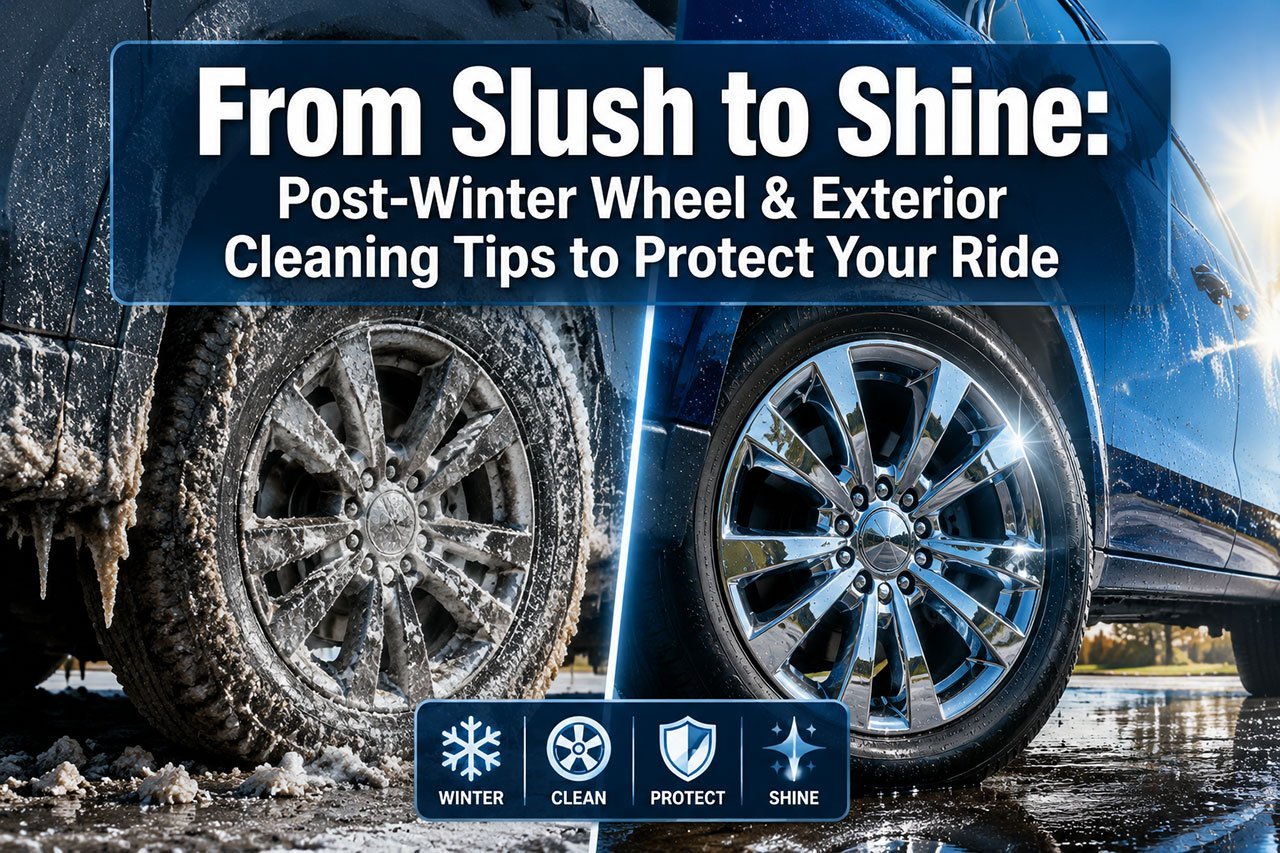
Road salt alone causes over $3 billion in vehicle rust damage across North America each year. That white residue clinging to your wheels and undercarriage isn’t just unsightly—it’s actively eating away at your vehicle’s protective coatings, metal components, and resale value. Post-Winter Wheel & Exterior Cleaning isn’t just about aesthetics; it’s essential maintenance that can add years to your vehicle’s lifespan and save thousands in repair costs.
Winter driving exposes vehicles to a harsh cocktail of corrosive materials: road salt, calcium chloride, sand, gravel, and chemical de-icers. These substances accumulate in wheel wells, undercarriages, and exterior surfaces, creating the perfect conditions for rust and deterioration. As temperatures rise in 2026 and winter transitions to spring, taking immediate action becomes critical for vehicle owners who want to protect their investment.
Key Takeaways
- Act quickly: Road salt and winter chemicals cause accelerating damage once temperatures rise above freezing
- Focus on hidden areas: Wheel wells, undercarriage, and brake components suffer the most winter damage
- Use proper techniques: pH-neutral cleaners and correct washing methods prevent additional harm to protective coatings
- Professional detailing: Comprehensive post-winter cleaning addresses damage that DIY methods often miss
- Prevention pays off: Proper spring cleaning can prevent thousands in rust repair and maintain resale value
Understanding Winter’s Toll on Your Vehicle
The Hidden Damage Beneath the Surface
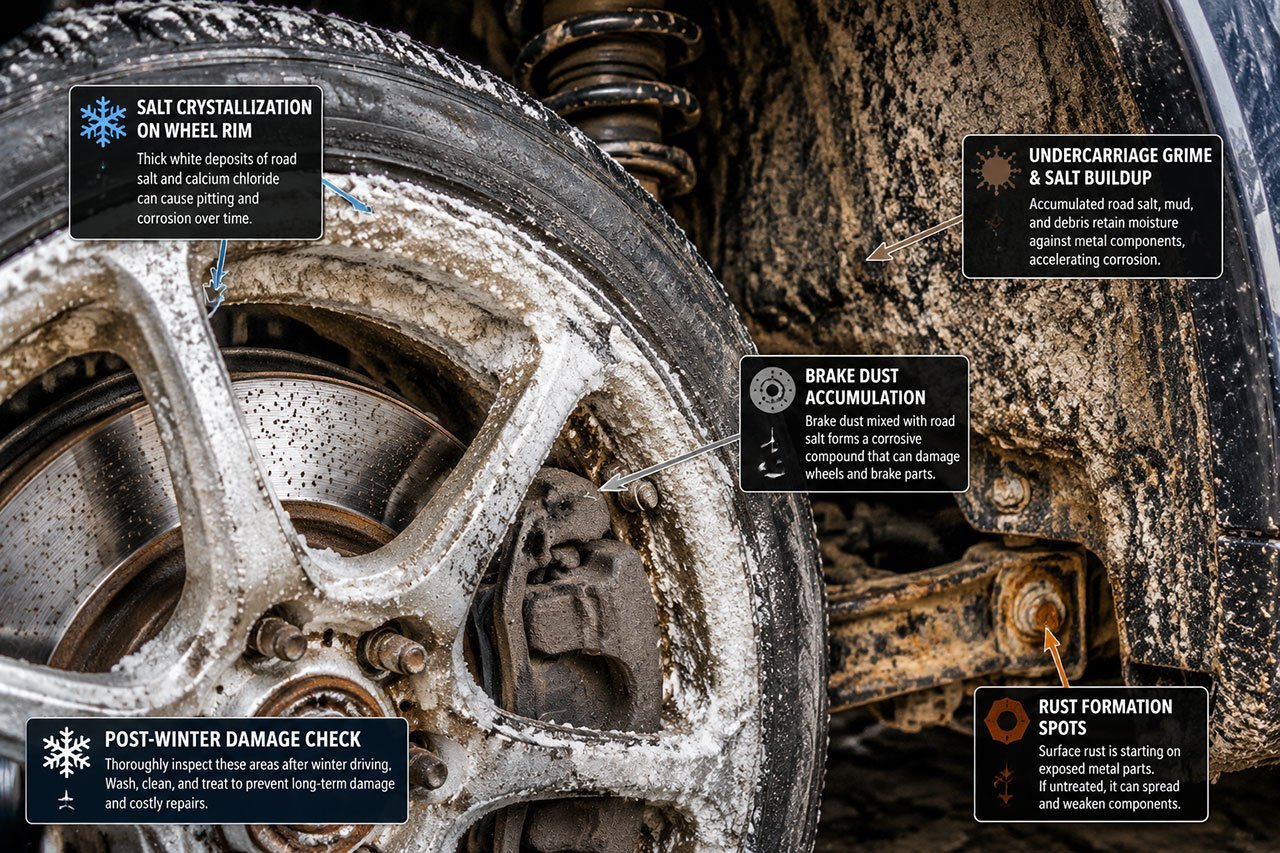
Winter driving conditions create multiple layers of damage that vehicle owners often overlook. Road salt (sodium chloride) and calcium chloride work by lowering water’s freezing point, but they also accelerate electrochemical reactions that cause metal corrosion. When mixed with moisture, these chemicals form a highly corrosive solution that penetrates paint chips, seams, and protective coatings.
Common winter damage includes:
- 🔧 Brake component corrosion – Salt buildup on rotors and calipers
- 🛞 Wheel finish deterioration – Pitting and discoloration on alloy wheels
- 🚗 Undercarriage rust – Frame, exhaust, and suspension component oxidation
- 🎨 Paint damage – Micro-scratches from sand and gravel embedded in ice
- 💧 Seal degradation – Rubber gaskets and weather stripping become brittle
The freeze-thaw cycle compounds these problems. Water enters tiny cracks and crevices, expands when frozen, and creates larger openings for corrosive materials to penetrate deeper into your vehicle’s structure.
Why Timing Matters for Post-Winter Wheel & Exterior Cleaning
Many vehicle owners wait until warmer weather arrives to address winter damage, but this delay can be costly. As temperatures rise, the corrosive chemical reactions accelerate dramatically. Salt residue that seemed dormant during freezing temperatures becomes highly active once moisture and warmth combine.
Critical timing factors:
| Temperature Range | Corrosion Rate | Action Required |
|---|---|---|
| Below 0°C (32°F) | Slow/dormant | Monitor buildup |
| 0-10°C (32-50°F) | Moderate | Begin cleaning |
| Above 10°C (50°F) | Rapid acceleration | Immediate cleaning essential |
Spring rain actually worsens the problem rather than washing away salt. Water activates dried salt deposits and spreads corrosive solutions into areas that remained protected during winter. This makes early spring the most critical time for comprehensive Post-Winter Wheel & Exterior Cleaning.
Essential Post-Winter Wheel & Exterior Cleaning Techniques
Step-by-Step Wheel Cleaning Process
Wheels and wheel wells accumulate the heaviest concentration of winter contaminants. Proper cleaning requires systematic attention to remove all traces of corrosive materials.
Professional wheel cleaning sequence:
- Pre-rinse thoroughly – Use high-pressure water (not exceeding 1,200 PSI) to remove loose debris
- Apply wheel-specific cleaner – Use pH-neutral formulas designed for your wheel finish (aluminum, chrome, painted)
- Agitate with proper tools – Soft-bristle brushes for face, detail brushes for lug nuts and crevices
- Clean wheel wells completely – Remove packed mud, salt, and debris from inner fender liners
- Rinse from top to bottom – Ensure all cleaning solution and loosened contaminants flow away
- Dry immediately – Prevent water spots and identify any remaining problem areas
⚠️ Warning: Avoid acidic wheel cleaners on vehicles with winter damage. Acid-based products can accelerate corrosion on compromised protective coatings.
Exterior Surface Restoration
Post-winter exterior cleaning goes beyond a simple car wash. The goal is removing embedded contaminants while assessing and addressing any damage to protective coatings.
Comprehensive exterior cleaning approach:
Phase 1: Contaminant Removal
- Foam pre-soak to loosen bonded salt and grime
- Two-bucket wash method with pH-neutral car shampoo
- Clay bar treatment to remove embedded particles
- Inspect paint for chips requiring touch-up
Phase 2: Surface Restoration
- Polish to remove minor scratches and oxidation
- Compound application for deeper paint defects
- Trim restoration for faded plastic components
- Glass cleaning and treatment
Phase 3: Protection Application
- Wax or ceramic coating to seal paint
- Wheel sealant to prevent future brake dust bonding
- Undercarriage coating for rust prevention
- Rubber and vinyl protectant for seals and trim
Critical Areas Often Overlooked in Post-Winter Cleaning
Undercarriage and Hidden Components
The undercarriage suffers the most severe winter damage but receives the least attention from vehicle owners. Salt spray from road surfaces coats exhaust systems, suspension components, fuel lines, and the vehicle frame—all critical systems where corrosion can create safety hazards and expensive repairs.
Key undercarriage cleaning priorities:
- Exhaust system: Salt accelerates rust on mufflers, catalytic converters, and pipes
- Brake lines: Corrosion can lead to dangerous brake fluid leaks
- Suspension components: Ball joints, control arms, and shock absorbers need inspection
- Frame and subframe: Structural rust compromises vehicle safety and value
Professional undercarriage cleaning uses specialized equipment to reach areas impossible to access with standard washing tools. High-pressure steam cleaning or dedicated undercarriage wash systems remove packed debris and salt deposits from complex mechanical assemblies.
Door Jambs, Hinges, and Seals
Water, salt, and debris accumulate in door jambs, trunk seals, and hood areas—places where moisture can remain trapped for weeks. These hidden pockets become corrosion hotspots and can cause electrical problems when salt residue reaches wiring harnesses.
Detailed cleaning checklist:
✅ Door jambs and sills
✅ Hood and trunk seal channels
✅ Fuel door area
✅ Tailgate or trunk hinges
✅ Sunroof drain channels
✅ Side mirror adjustment mechanisms
Apply protective lubricant to hinges and moving parts after cleaning to prevent future corrosion and ensure smooth operation.
DIY vs. Professional Post-Winter Wheel & Exterior Cleaning
What Vehicle Owners Can Accomplish at Home
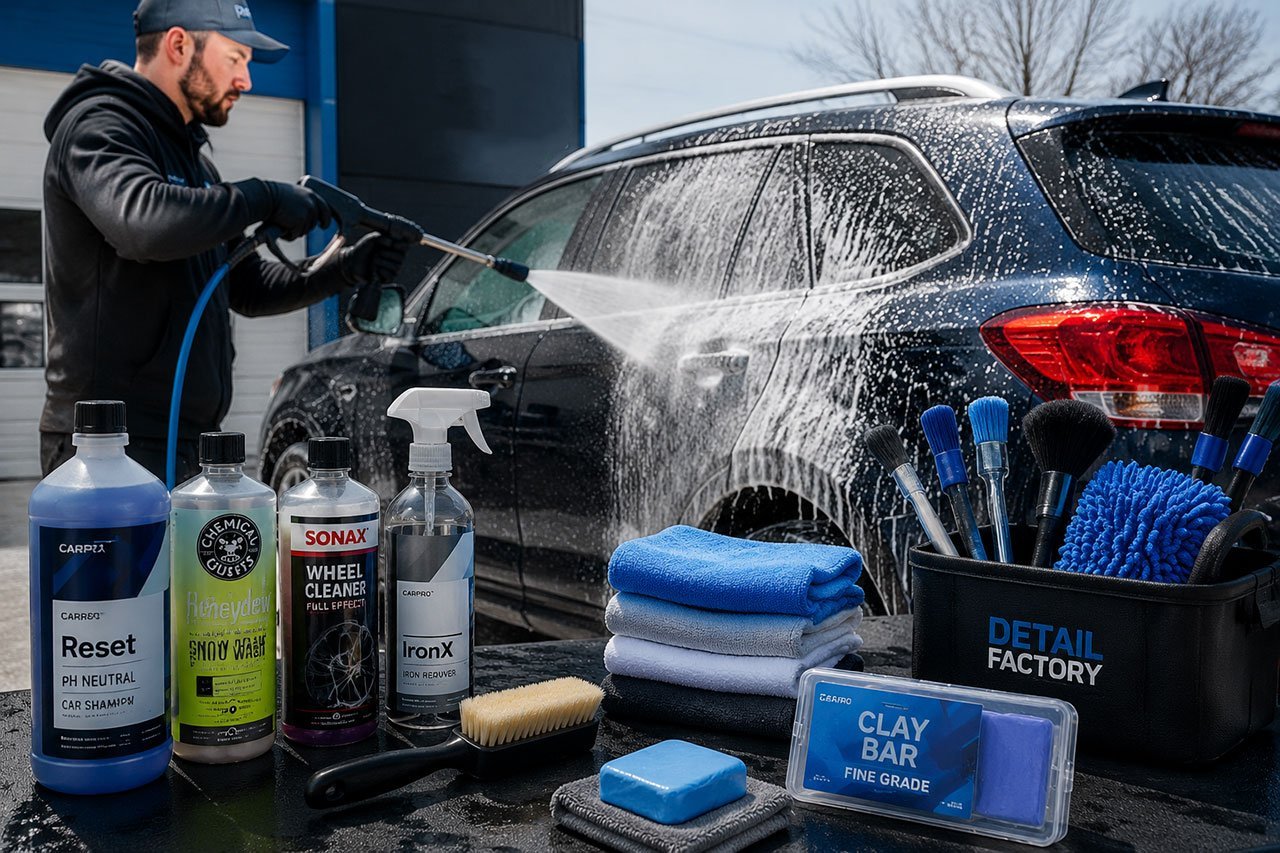
Dedicated vehicle owners can address many post-winter cleaning needs with proper products and techniques. DIY cleaning works well for regular maintenance and surface-level contamination removal.
Effective DIY cleaning includes:
- Regular washing with quality car shampoo
- Wheel cleaning with appropriate brushes and cleaners
- Clay bar treatment for paint decontamination
- Wax or sealant application
- Trim and tire dressing
Required investment for quality DIY cleaning:
- pH-neutral car shampoo: $15-25
- Wheel cleaner: $12-20
- Microfiber towels (pack): $20-30
- Soft-bristle brushes: $15-25
- Clay bar kit: $20-35
- Wax or sealant: $25-50
Total initial investment: $107-185
When Professional Detailing Makes Sense
Professional detailing services provide access to specialized equipment, commercial-grade products, and expertise that delivers superior results—especially for comprehensive Post-Winter Wheel & Exterior Cleaning that addresses hidden damage.
Professional advantages:
🏆 Specialized equipment: Pressure washers, steam cleaners, and lift access for undercarriage
🏆 Professional products: Commercial-grade cleaners and protective coatings
🏆 Expert assessment: Trained eyes identify developing problems before they become expensive
🏆 Time efficiency: Complete service in 2-4 hours vs. full day DIY effort
🏆 Guaranteed results: Professional standards and correction of any issues
Professional services become essential when dealing with:
- Heavy salt buildup and corrosion
- Undercarriage cleaning and rust prevention
- Paint correction for winter damage
- Ceramic coating application
- Comprehensive pre-sale preparation
“The cost of professional post-winter detailing is typically 5-10% of the rust damage repair costs it prevents. It’s preventive maintenance that pays for itself many times over.” — Canadian Automotive Association
Finding Quality Professional Services
Not all detailing services provide the thorough Post-Winter Wheel & Exterior Cleaning that vehicles need after harsh winter conditions. Look for providers who specifically address winter damage with comprehensive packages.
Questions to ask potential detailing services:
- Do you include undercarriage cleaning and rust prevention?
- What type of wheel cleaning products do you use for different finishes?
- Do you inspect for paint damage and offer touch-up services?
- What protective coatings do you apply after cleaning?
- Can you provide before/after documentation?
For vehicle owners seeking professional post-winter detailing services, Deluxe Shine offers comprehensive packages specifically designed to address winter damage and restore vehicle protection.
Long-Term Protection After Post-Winter Cleaning
Maintaining Results Throughout the Year
Post-Winter Wheel & Exterior Cleaning provides a fresh start, but maintaining that protection requires ongoing attention. Establishing a regular maintenance schedule prevents future damage and keeps protective coatings effective.
Recommended maintenance schedule:
| Frequency | Tasks |
|---|---|
| Weekly | Quick rinse to remove fresh contaminants |
| Bi-weekly | Full wash with proper technique |
| Monthly | Wheel deep clean and tire dressing |
| Quarterly | Clay bar treatment and wax refresh |
| Annually | Professional detailing and coating renewal |
Protective Products Worth the Investment
Modern protective products offer significantly better performance than traditional waxes. Consider these upgrades for enhanced protection:
Ceramic coatings: Provide 2-5 years of protection with superior resistance to chemicals, UV damage, and contamination bonding. Professional application costs $500-1,500 but dramatically reduces maintenance requirements.
Paint protection film (PPF): Clear urethane film protects high-impact areas (front bumper, hood, mirrors) from rock chips and road debris. Particularly valuable for newer vehicles or those in harsh climates.
Wheel coatings: Specialized sealants create a barrier that prevents brake dust bonding and makes future cleaning significantly easier.
Conclusion: Protect Your Investment with Proper Post-Winter Care
Winter conditions inflict serious damage on vehicles, but prompt action in spring can prevent lasting harm and expensive repairs. Post-Winter Wheel & Exterior Cleaning isn’t optional maintenance—it’s essential protection that preserves your vehicle’s appearance, functionality, and value.
The corrosive effects of road salt and winter chemicals accelerate rapidly as temperatures rise. Waiting even a few weeks can allow rust to establish itself in critical areas, turning simple cleaning into complex repair work. Vehicle owners who prioritize comprehensive spring cleaning consistently avoid the rust damage, brake problems, and paint deterioration that plague neglected vehicles.
Take action now:
- Schedule professional detailing within the next two weeks if you haven’t already addressed winter damage
- Inspect critical areas including wheel wells, undercarriage, and door jambs for salt buildup
- Apply protective coatings immediately after cleaning to prevent future contamination
- Establish a maintenance routine to maintain the protection you’ve restored
Don’t let winter’s legacy continue damaging your vehicle through spring and summer. Whether you choose professional services or tackle the work yourself, comprehensive Post-Winter Wheel & Exterior Cleaning is one of the most cost-effective investments you can make in your vehicle’s longevity.
For professional detailing services that specifically address winter damage and provide long-lasting protection, visit Deluxe Shine to schedule your post-winter restoration service today.