
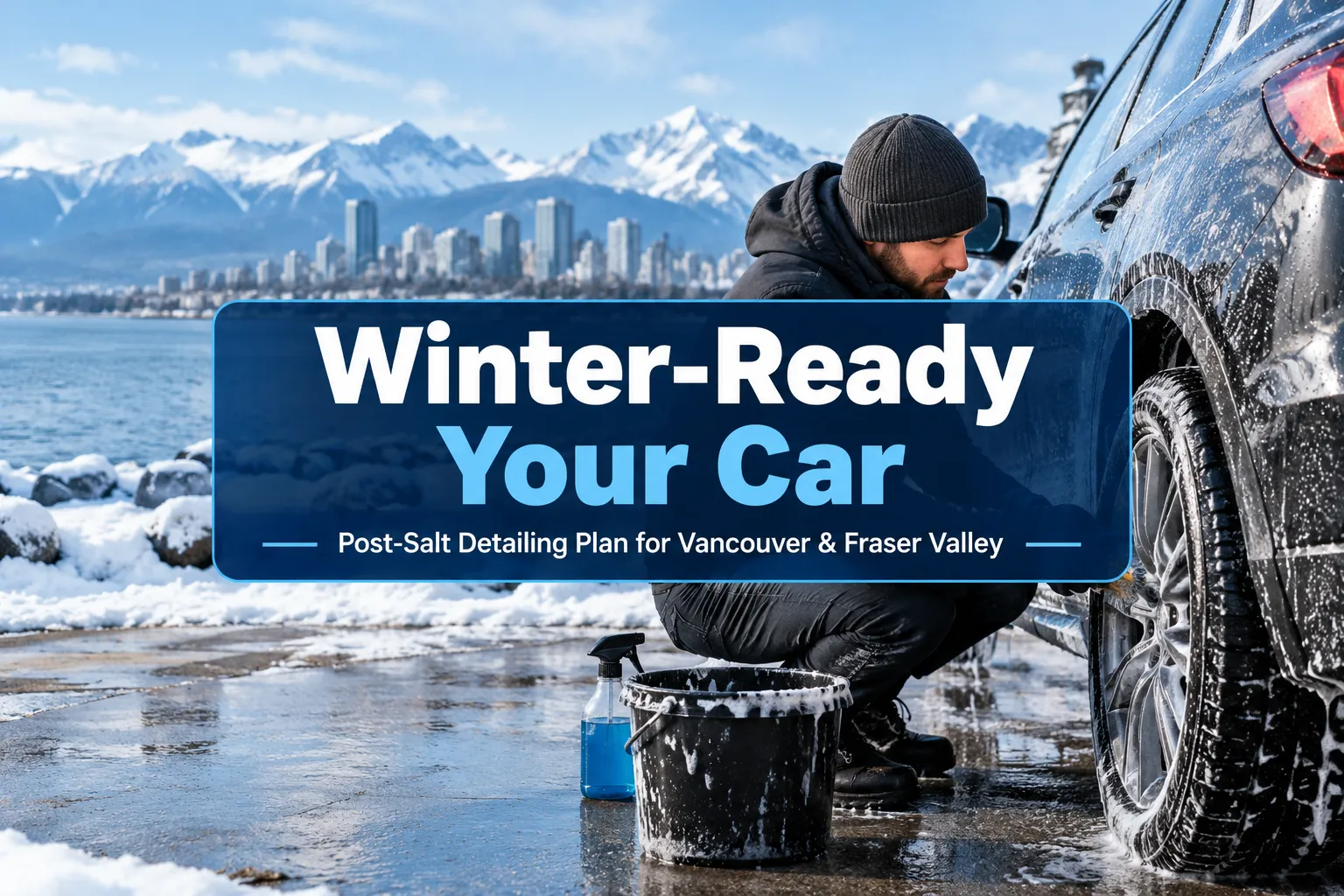
British Columbia applies roughly 7,000 tonnes of de-icing salt across Lower Mainland highways in a single cold snap, and that residue does not vanish when the temperature rises, it settles into wheel wells, floor mats, and bare metal seams. To Winter-Ready Your Car after this exposure means more than a quick rinse. A systematic post-salt detailing plan protects Vancouver and Fraser Valley vehicles from long-term corrosion, interior grime, and costly repairs before the damage compounds.
Key Takeaways
- Road salt residue clings to undercarriages, paint, and interiors for weeks after winter ends, accelerating corrosion on untreated surfaces.
- A proper post-salt plan targets three zones: undercarriage, exterior paint and wheels, and interior carpets and mats.
- High-pressure undercarriage flushing, alkaline cleaners, and protective coatings form the core defense against salt damage.
- Interior salt stains and trapped moisture can lead to mold; professional extraction prevents lasting damage.
- Ceramic coatings and seasonal wax extend the protective barrier between deep details.
Why You Need to Winter-Ready Your Car After Salt Exposure
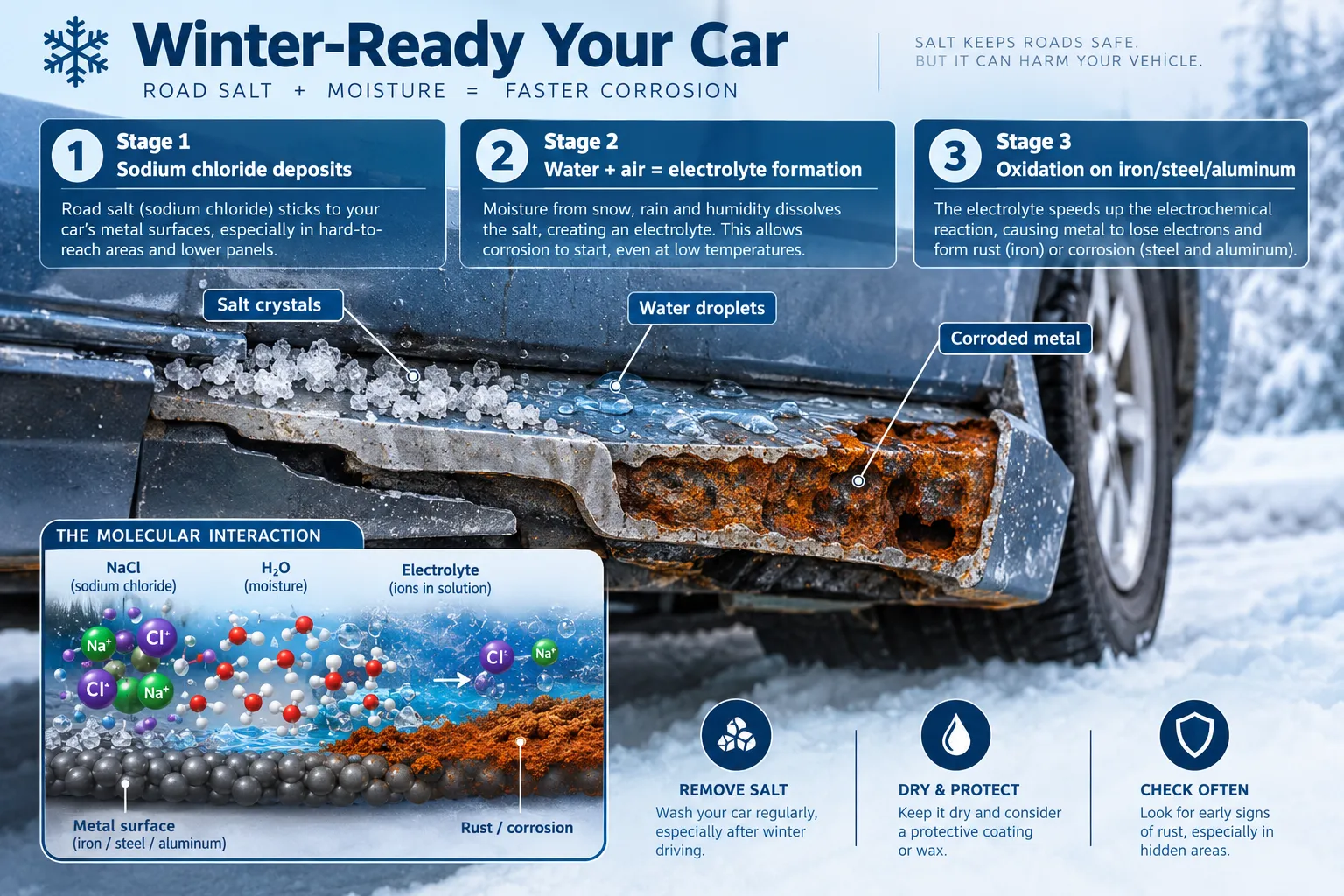
Road salt is chemically aggressive. When sodium chloride mixes with water and air, it creates an electrolyte that speeds up oxidation on iron, steel, and aluminum components. Even drivers in Vancouver, where snowfall is lighter than the Fraser Valley, encounter salt on bridges, highway on-ramps, and shaded stretches that stay icy longer. Trucks and commercial vehicles face even higher exposure because of their larger metal surface area and longer route times.
The damage is cumulative. Each cycle of wet-dry-wet leaves more salt behind, drawing moisture into the surface and keeping corrosion active even on dry days. A post-salt detailing plan is not a one-time fix. It is a seasonal protocol that should be repeated whenever vehicles have driven on treated roads for several consecutive days.
Common salt-related damage zones:
| Zone | What salt does | Risk if untreated |
|---|---|---|
| Undercarriage | Clings to frame, brake lines, fuel tank | Structural rust, brake line failure |
| Wheel wells | Builds up on plastic liners and suspension arms | Pitted alloy, seized fasteners |
| Lower doors and sills | Creeps past weather seals | Internal panel rust |
| Floor carpets and mats | Crystallizes into fibers | Permanent salt stains, mold risk |
| Paint surface | Etches clear coat in acidic rain | Dull finish, paint failure |
For broader seasonal guidance, post-winter car care resources outline how to integrate these steps into a year-round maintenance schedule.
The Undercarriage: Ground Zero for Salt Corrosion
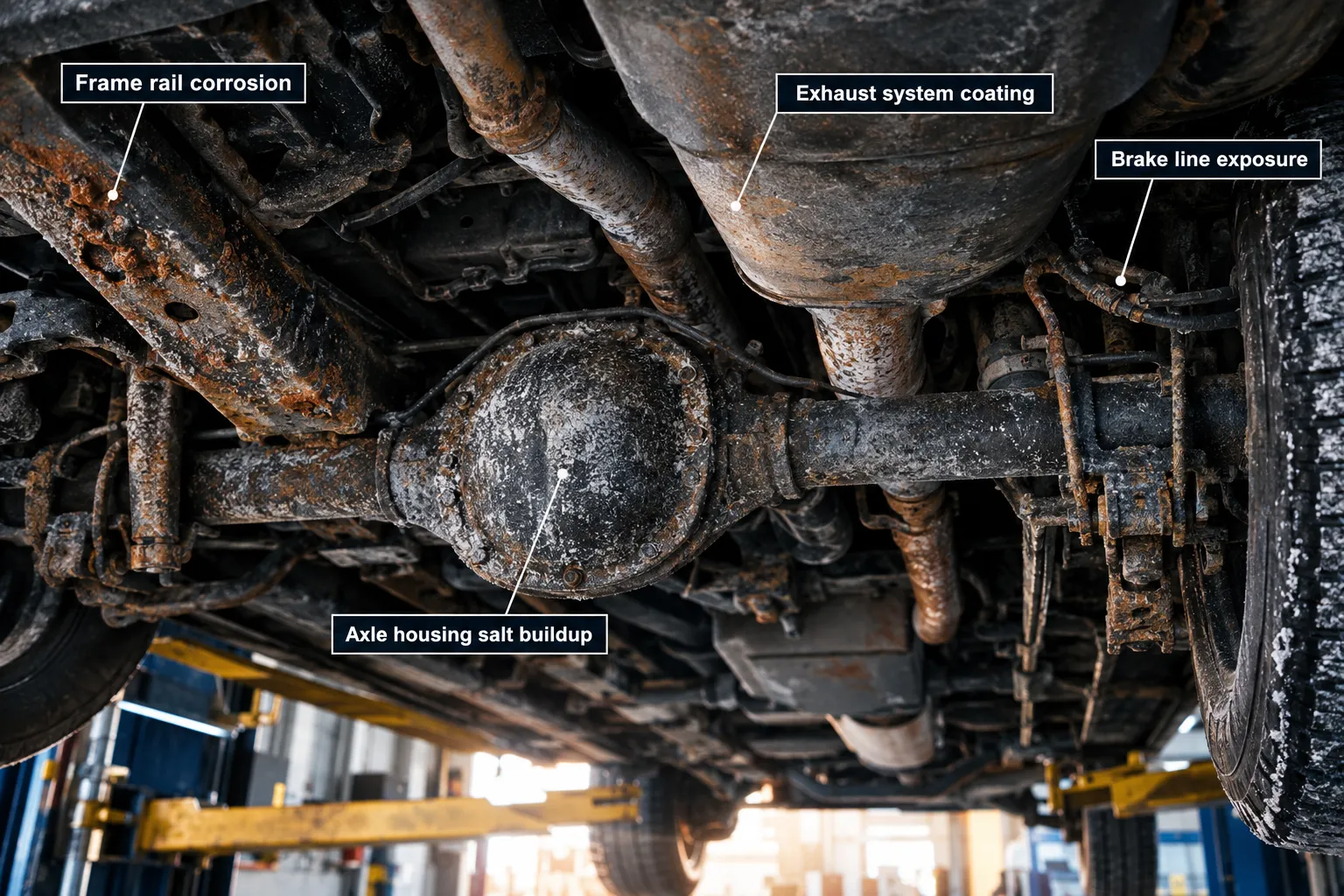
The undercarriage is where most salt damage begins, and where most drivers never look. Salt spray from wet pavement coats the frame, axle housings, exhaust system, and brake and fuel lines. Because these areas stay damp longer than the painted exterior, corrosion can advance unnoticed for months.
A proper undercarriage flush follows a specific order:
- Pre-rinse with high-pressure water to displace loose salt crystals and grit. Use a pressure washer rated 1,200-2,000 PSI with a fan nozzle, not a pinpoint jet that can force water past seals.
- Apply an alkaline or citrus-based degreaser to break the chemical bond between salt and metal. Let it dwell for 3-5 minutes but never let it dry.
- Agitate with a long-reach brush on suspension components, subframes, and inner fender lips. A soft-bristle brush avoids scratching protective coatings.
- Rinse thoroughly from top to bottom, working from the engine bay downward so contaminants flow away from clean surfaces.
- Inspect for surface rust, small spots can be treated with a rust converter before they spread.
- Apply a corrosion inhibitor or fluid film as a final barrier. These products displace residual moisture and creep into seams where water hides.
Truck drivers should pay extra attention to leaf springs, hitch receivers, and frame cross-members, where salt-laden mud packs tightly and holds moisture against bare metal. A follow-up inspection every two to three weeks during peak salt season catches problems early.
Salt does not wait for spring. By the time corrosion is visible on the body, the undercarriage has already been under attack for weeks.
For further maintenance context, Winter Car Care guidance covers ongoing steps between full details.
Winter-Ready Your Car: Interior Grime and Salt Stain Removal
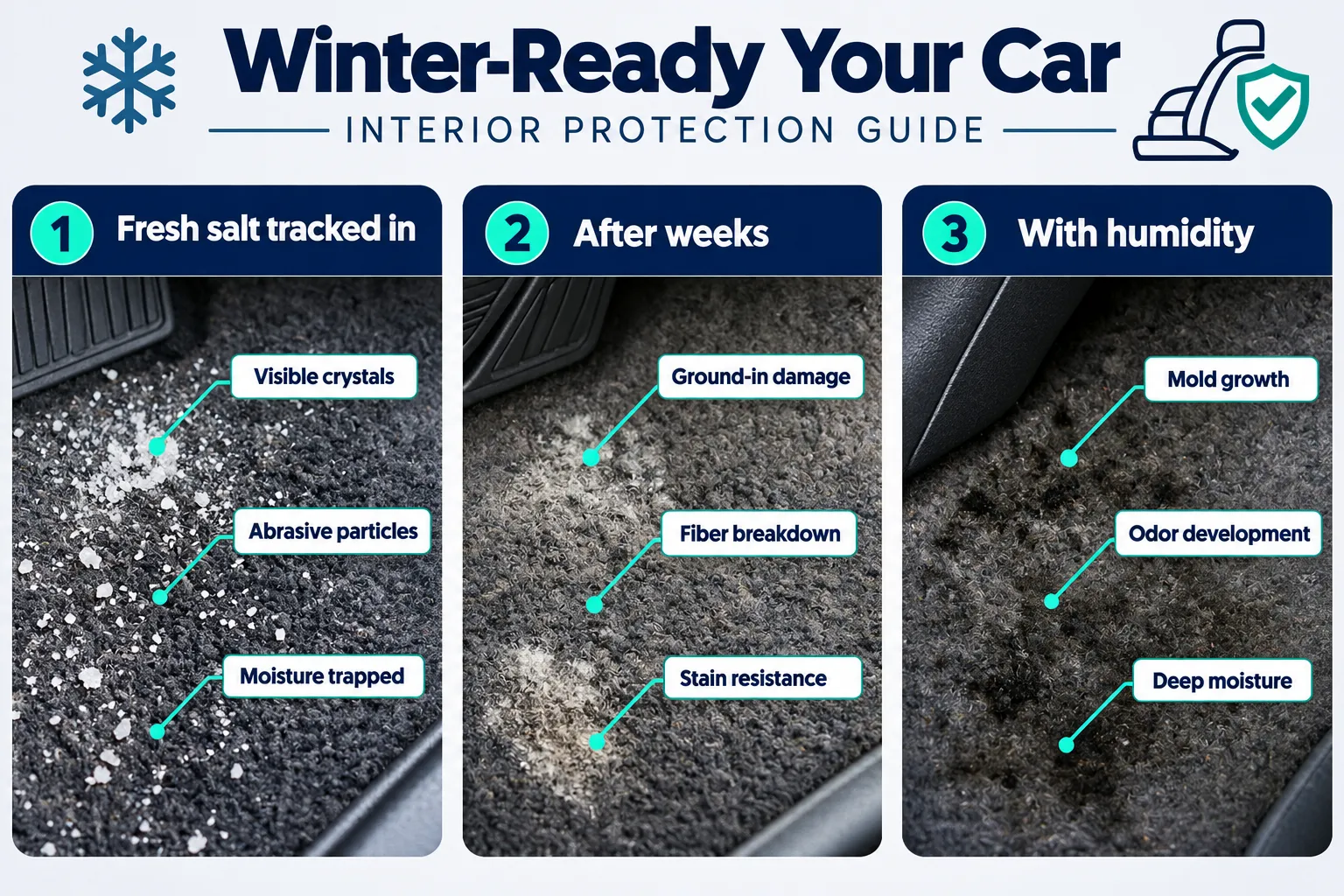
Interior damage is less dramatic than frame rust, but it adds up fast. Salt crystals tracked onto carpets act like sandpaper, grinding fibers dull and leaving white stains that resist ordinary vacuuming. Combined with Vancouver’s winter humidity, trapped moisture also creates conditions for mold and mildew, a real concern in vehicles that sit sealed for days at a time.
Interior post-salt plan:
- Remove all mats and vacuum thoroughly, including seat tracks and cargo areas. A crevice tool reaches the seams where salt collects.
- Shampoo carpets and fabric mats with a hot-water extractor. The heat dissolves salt bonds; the extraction pulls dirty water out of the fibers rather than spreading it deeper.
- Treat rubber and all-weather mats separately with a mild detergent and a stiff brush. Avoid harsh solvents that can dry out the rubber.
- Wipe all hard surfaces, door sills, pedals, kick panels, and seat bases, with a pH-balanced interior cleaner.
- Deodorize and dry with an air mover or open windows on a dry day. Trapped moisture is the leading cause of lingering musty smells.
For drivers dealing with persistent odors or visible mold spots, professional Expert Mold Removal Vehicle Detailing Services in Vancouver addresses the root cause rather than masking it. Dedicated guidance on Car Mats and Carpets Cleaning: Remove Winter Salt Stains walks through specific carpet treatments that prevent permanent staining.
Protect and Winter-Ready Your Car: Exterior Paint and Coatings
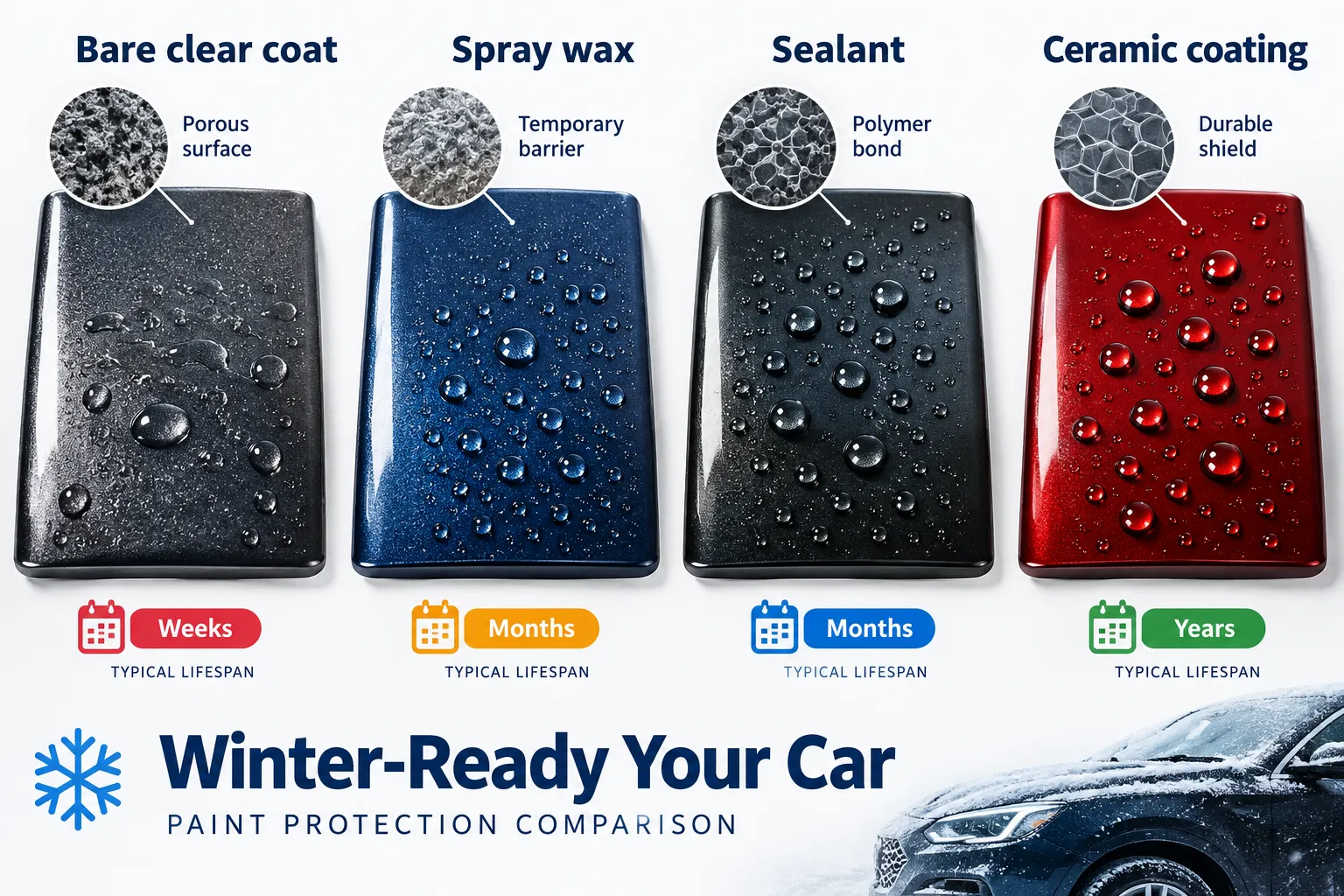
Once salt is removed, the next priority is rebuilding a protective barrier so the next exposure does less damage. Bare or aging clear coat is porous at a microscopic level, and salt-laden water finds those pores quickly.
Exterior protection layers, from lightest to most durable:
| Option | Lifespan | Best for | Key benefit |
|---|---|---|---|
| Spray sealant | 1-3 months | Quick top-ups between details | Easy application, adds gloss |
| Carnauba wax | 2-4 months | Show vehicles, occasional drivers | Warm, deep shine |
| Synthetic polymer wax | 4-6 months | Daily drivers in moderate climates | Longer-lasting hydrophobic barrier |
| Ceramic coating | 2-5 years | Long-term protection, all climates | Chemical resistance, easier cleaning |
Ceramic coatings are the strongest defense in a salt-heavy environment. They bond chemically with the clear coat, creating a hard, hydrophobic surface that resists salt etching and makes future washes faster. For Vancouver drivers weighing options, Ceramic Coating in Vancouver Services | Vehicle & Car Protection details the application process and expected lifespan.
Wheels deserve the same attention. Brake dust and salt combine into a corrosive paste that pits alloy rims. Specialized Fraser Valley Wheel Cleaning & Polishing services remove that buildup safely, and seasonal guidance in Post-Winter Wheel & Exterior Cleaning Tips for 2026 covers the ongoing routine.
Maintaining Your Post-Salt Detailing Results
A thorough detail is only half the job. Maintaining it through the remainder of the salt season keeps the investment intact.
Weekly habits during active salt season:
- Rinse the undercarriage at a self-serve wand wash after any extended drive on treated roads.
- Wipe door sills and trunk seals with a damp microfiber cloth to catch salt before it enters the cabin.
- Shake out floor mats and vacuum high-traffic carpets weekly.
- Inspect wheel faces and lug nuts for white salt residue.
- Keep a bottle of pH-balanced quick detailer in the vehicle for spot cleaning.
Monthly checkpoints:
- Recheck the undercarriage for new surface rust.
- Reapply a spray sealant if water no longer beads on the paint.
- Deep-clean carpets if anyone notices a musty odor.
- Inspect weatherstripping for cracking or salt deposits.
The goal is not perfection every week, it is preventing the compounding damage that turns a seasonal problem into a multi-year repair bill.
Consistency beats intensity. A five-minute rinse after each salt drive prevents more corrosion than one annual deep clean.
Conclusion
A post-salt detailing plan is the single most effective way to Winter-Ready Your Car for Vancouver and Fraser Valley conditions. The protocol is straightforward: flush the undercarriage, remove interior salt and moisture, restore a protective coating to the paint and wheels, and maintain the results with simple weekly habits. Skipping any one of these steps leaves a gap where corrosion, staining, or mold can take hold.
Actionable next steps:
- Schedule a full post-salt detail within two weeks of the last major salt exposure.
- Book undercarriage flushing as a standalone service if a full detail is not yet feasible.
- Have carpets and mats professionally extracted at the first sign of white salt stains.
- Apply or refresh a ceramic coating before the next winter to get ahead of the cycle.
- Bookmark a seasonal maintenance checklist so the plan repeats each year.
Taking action early keeps small salt damage from becoming structural, cosmetic, or health-related damage. A disciplined approach now extends vehicle life, preserves resale value, and keeps every drive through a Lower Mainland winter safer and cleaner.